

Choosing a new front door usually starts with one question: what should it be made of? Fiberglass, steel, and wood are the three main options for residential entry doors, and each one comes with its own mix of cost, durability, security, energy efficiency, and maintenance. The right choice depends on your budget, your home's style, and how much upkeep you are willing to take on.
Below we compare all three materials side by side, explain where each one shines and where it falls short, and walk through real situations to help you decide which door fits your home.
What is the best material for an entry door?
TL;DR: For most North Jersey homes, fiberglass is the best all-around entry door material because it resists dents, rot, and warping and insulates well. Steel is the best value for security on a budget. Wood offers a classic, authentic look but costs the most and needs the most maintenance.
- Choose fiberglass if you want low maintenance, strong insulation, and the option of a wood-grain look without the upkeep.
- Choose steel if your priorities are security and getting the most door for your money.
- Choose wood if authentic natural wood is important for your home's style and you are comfortable with regular refinishing.
How do fiberglass, steel, and wood doors compare?
TL;DR: Steel costs the least, fiberglass balances durability and efficiency, and wood leads on natural beauty but trails on maintenance and weather resistance.
| Feature | Fiberglass | Steel | Wood |
|---|---|---|---|
| Typical installed cost | $800 to $3,500 | $600 to $2,000 | $1,000 to $4,000+ |
| Durability | Resists dents, rot, warping, and cracking | Very strong, but can dent and rust if the finish is damaged | Can warp, crack, or rot without regular care |
| Security | Strong, especially with a reinforced frame and quality locks | Excellent forced-entry resistance | Strong when solid, but varies with thickness and construction |
| Insulation | Excellent with a foam core | Very good with a foam core | Lower than foam-core doors |
| Maintenance | Low | Low to moderate | High |
| Look | Smooth or realistic wood grain, paintable or stainable | Smooth or embossed, usually painted | Authentic natural wood grain |
Costs above are general installed ranges for a single entry door, including the door, frame, weatherstripping, and standard hardware. Your price depends on size, style, glass, and the condition of your opening.
What are the pros and cons of fiberglass entry doors?
TL;DR: Fiberglass doors are durable, energy efficient, and low maintenance, and they can be made to look like real wood. The main tradeoff is a higher price than steel.
Fiberglass pros
- Will not rot, rust, or warp with seasonal humidity swings
- Resists dents and scratches better than steel
- Foam cores provide strong insulation against drafts
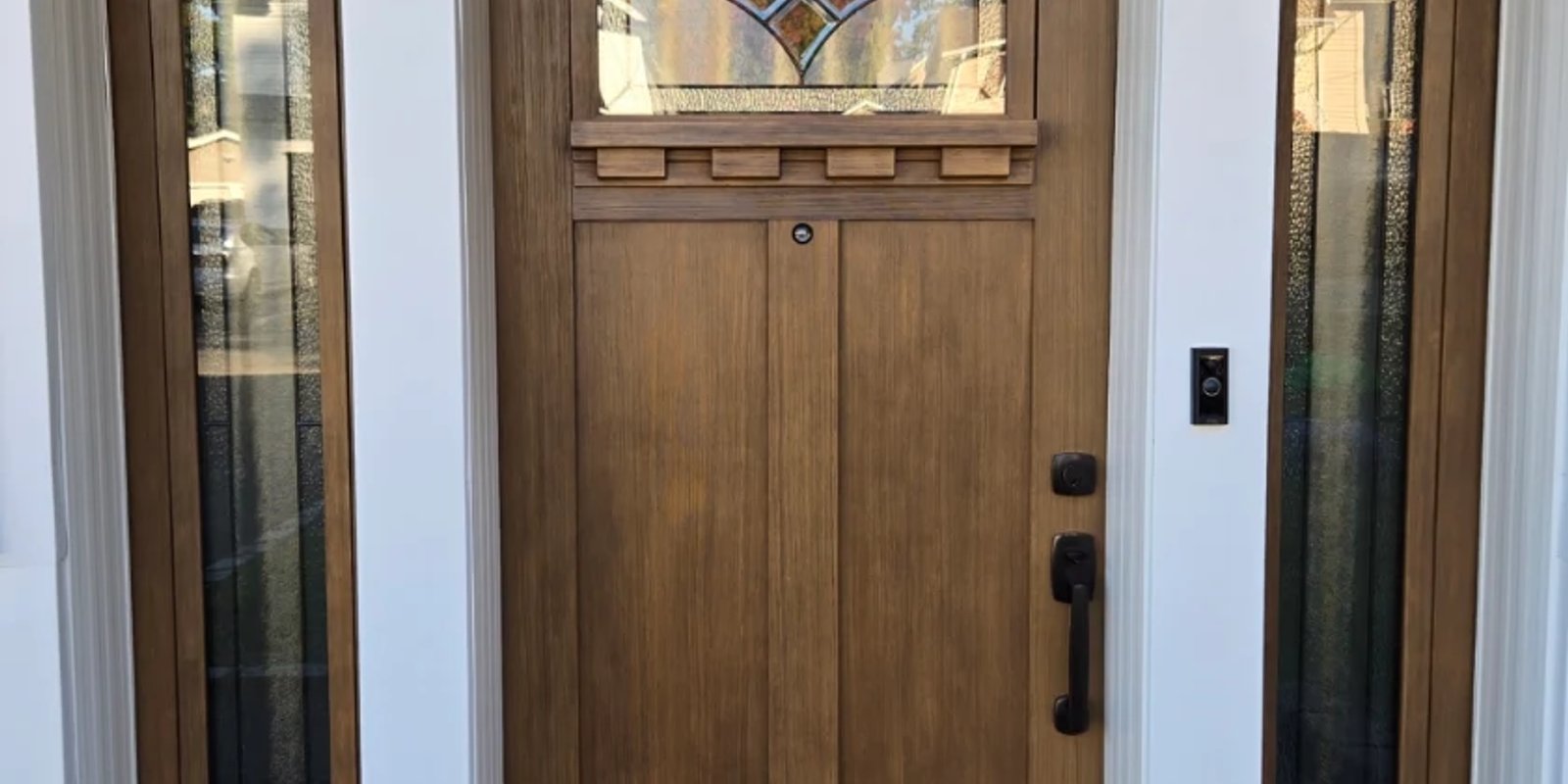
- Can be painted or stained, including realistic wood-grain finishes
- Holds up well to freeze-thaw cycles
Fiberglass cons
- Costs more than a comparable steel door
- A severe impact can crack the surface, and repairs are harder to make invisible
- Even the best wood-grain finishes are not quite the same as real wood up close
Fiberglass is a strong fit for North Jersey's climate. Cold winters, humid summers, and the freeze-thaw cycle in between are hard on wood doors, but fiberglass stays stable through all of it.
What are the pros and cons of steel entry doors?
TL;DR: Steel doors offer excellent security and good insulation at the lowest price. They can dent, and scratches that expose the metal need to be touched up to prevent rust.
Steel pros
- Lowest cost of the three materials
- Excellent resistance to forced entry
- Foam-core steel doors insulate well
- Strong documented resale value, with steel entry door replacement ranking second nationally in the 2025 Cost vs. Value Report
Steel cons
- Can dent from impacts, and dents are difficult to repair cleanly
- Scratches that reach the metal can rust if they are not touched up
- The surface can get hot in direct sun, especially with dark paint
- Fewer convincing wood-look options than fiberglass
Steel is a smart pick when you want a clean, updated look and solid security without stretching your budget, especially on doors that are sheltered by a porch or overhang.
What are the pros and cons of wood entry doors?
TL;DR: Wood doors have unmatched natural character and suit historic and high-end homes, but they cost the most and need regular refinishing to hold up against moisture and temperature swings.
Wood pros
- Authentic grain, warmth, and character
- Can be custom built, carved, and stained in many species and finishes
- Fits historic and traditional architecture naturally
- Scratches and dings can often be sanded and refinished
Wood cons
- Highest cost of the three materials
- Can warp, swell, or crack with changes in humidity and temperature
- Needs regular sealing, painting, or staining to prevent rot
- Generally insulates less effectively than foam-core fiberglass or steel
Wood performs best when it is protected from direct weather, such as under a deep porch, and when the homeowner is committed to keeping up with maintenance.
Which entry door material is most energy efficient?
TL;DR: Fiberglass and steel doors with insulated foam cores are typically the most energy efficient. But installation matters just as much as material, because a poorly sealed door leaks air no matter what it is made of.
Energy efficiency depends on more than the door slab itself:
- Core. Insulated foam cores in fiberglass and steel doors slow heat loss far better than a solid or hollow wood slab.
- Glass. Decorative glass and sidelights add style but are the least insulated part of the door, so insulated, energy-efficient glass matters.
- Weatherstripping and threshold. Worn seals and gaps under the door let cold air in all winter.
- Installation. A door that is square, properly flashed, and sealed keeps air and water out. A crooked or poorly sealed door leaks regardless of the material.
Which material is right for your home?
TL;DR: Start with what matters most to you, whether that is budget, security, style, or low maintenance, and match the material to it.
| If your priority is | Consider |
|---|---|
| Lowest upfront cost | Steel |
| Security | Steel or fiberglass with a reinforced frame and quality locks |
| Low maintenance | Fiberglass |
| Energy efficiency | Foam-core fiberglass or steel |
| A wood look without the upkeep | Wood-grain fiberglass |
| Authentic natural wood | Wood |
| Resale value on a budget | Steel |
Example: A front door that takes direct weather
If your entry faces the street with no porch or overhang, it takes the full force of rain, snow, and summer sun. Fiberglass is usually the best choice here because it will not swell, rot, or rust, and it holds its finish well.
Example: Updating a home before listing it
If you are preparing to sell and want a sharp first impression without overspending, a new steel entry door is hard to beat. It is affordable, looks clean and updated in listing photos, and has a strong track record for resale value.
Example: A historic or traditional home
Some older homes in North Jersey towns have architectural character that calls for real wood. If authenticity matters and the door is protected by a porch, wood can be the right call. If you want the look without the refinishing, a stainable wood-grain fiberglass door is a close alternative.
Example: A busy household with kids and pets
A door that gets opened, kicked, and bumped all day needs to stand up to wear. Fiberglass resists dents and scratches better than steel and needs less upkeep than wood, which makes it a practical everyday choice.
Does the material matter more than the installation?
TL;DR: No. Even the best door will leak, stick, or fail early if it is not installed correctly. Professional installation protects both the door and your home.
An exterior door has to be set square in the opening, shimmed, fastened, flashed, and sealed to keep out air and water. When any of those steps is off, you may notice drafts, a door that sticks or will not latch, or water damage around the threshold over time. That is why choosing the right installer matters as much as choosing the right material.
Get help choosing the right entry door
The best way to pick the right material is to see your options in person and have your opening measured and inspected by an expert. Our team offers free in-home estimates, factory-direct pricing, 0% financing for 72 months, and a lifetime labor warranty on every install. Learn more about our custom entry doors and book your free estimate.
Prices above are general ranges and not a quote. Your actual cost depends on the door, the opening, and the scope of the work.


 5.0